
How Mizu Hibachi Restaurant Found 6 Insurance Gaps That Could Have Closed the Business
Key Takeaways
A general liability policy does not automatically cover food poisoning claims from raw seafood and sushi. Restaurants serving raw fish need specific products liability coverage addressing food and beverage claims. Relying on a standard GL policy for this exposure is one of the most common and most costly assumptions in the restaurant industry.
Hibachi restaurants face a unique underwriting process that standard restaurant policies are not designed for. Carriers need to know whether table cooking occurs, what safety protocols are in place, and how many seats surround each grill. Restaurants with live entertainment face additional coverage requirements beyond standard dining operations.
Adding a catering or off-premises operation without notifying your insurer voids coverage for that activity entirely. Brian's backyard hibachi events were generating real revenue with zero insurance protection. A commercial umbrella policy extending to off-premises catering operations and workers’ compensation disability coverage for off-site employees are both essential for any restaurant running events outside its four walls.
Equipment breakdown coverage exists specifically to cover refrigeration failures, power outages, and the inventory loss that follows. Brian had this coverage and lost eight thousand to ten thousand dollars in raw seafood inventory in 2025 without filing a claim because nobody told him the coverage existed.
Liquor liability is a mandatory coverage for any restaurant serving alcohol in New York. A standard GL policy excludes alcohol-related incidents under the liquor liability exclusion. Mizu serves sake, wine, and beer and requires a standalone liquor liability policy to address its exposure under New York Dram Shop law.
Restaurants performing catering in commercial buildings must carry certificates of insurance meeting the building management company's requirements. This means either increasing commercial liability limits on the existing policy or purchasing separate special event insurance for each engagement.
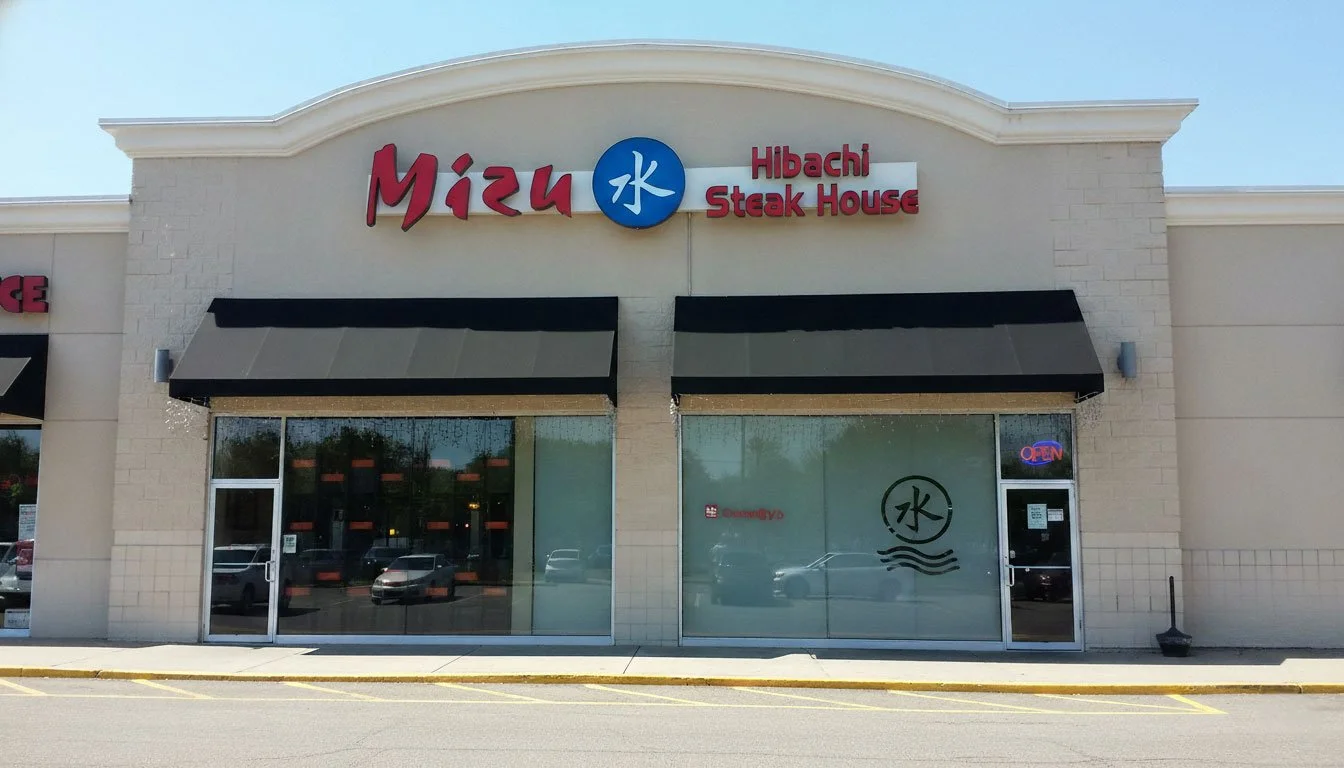
Brian Li runs Mizu Hibachi Restaurant in Staten Island. On any given night, his team is slicing fresh sashimi behind the sushi bar, performing tableside hibachi shows for families celebrating birthdays and anniversaries, pouring sake and wine for guests, and sometimes packing up the equipment to bring the full hibachi experience to a client's backyard for a private party.
From the outside, it looks like a well-run restaurant doing what it does best.
From an insurance standpoint, it is one of the most complex risk profiles in the food service industry. And until Brian sat down with Blue Rock Insurance Services, almost none of that complexity was properly covered.
His previous broker had sold him the cheapest available policy without asking a single question about how Mizu actually operates. No questions about the hibachi fire performance. No questions about the raw seafood program. No questions about the sake and beer service. No questions about the backyard catering events.
Senior Insurance Specialist Cindy Lee found six gaps in what Brian thought was complete coverage. This is that story, in both their words.
"My Previous Broker Just Sold Me the Cheapest Policy"
Brian Li, Owner, Mizu Hibachi Restaurant, Staten Island:
"I had insurance. I paid the premium every year. I never thought about it beyond that. My previous broker set it up, and I just trusted that I was covered. Nobody ever asked me what kind of food we serve, how the hibachi section works, that we sell sake and beer, or that we do backyard parties. They sold me something cheap and moved on.
When Cindy started asking me questions, I realized I did not actually know what my policy covered. I could not answer most of what she asked me. That was a wake-up call by itself."
Cindy Lee, Senior Insurance Specialist, Blue Rock Insurance Services:
"When Brian first came to us, we asked to review his existing policy documents. Some of the documents were missing entirely. His previous broker had not kept complete records, and Brian did not have full copies of what he had purchased.
That situation is more common than most restaurant owners realize. A broker who does not ask about your business model is a broker who is not building coverage around your actual risk.
The first thing I did was conduct a full discovery of how Mizu operates. The sushi bar. The hibachi section. The sake and wine service. The backyard catering events. The walk-in refrigeration units. The staff structure. I needed to understand the business completely before I could tell Brian what coverage he actually needed.
What I found was a policy designed for a standard dining establishment. Mizu is not a standard dining establishment. It is a raw seafood restaurant with live fire entertainment, alcohol service, and an off-premises catering operation. Every one of those elements has its own insurance implications, and none of them were properly addressed."
Gap 1: Raw Seafood and the Food Poisoning Exposure Most Restaurant Owners Miss
Brian Li:
"When Cindy asked me whether my policy specifically covered food poisoning claims from raw seafood, I did not know how to answer. I assumed my general liability covered everything related to the food we serve. I did not know there was a difference between a general claim and a food-specific claim."
Cindy Lee:
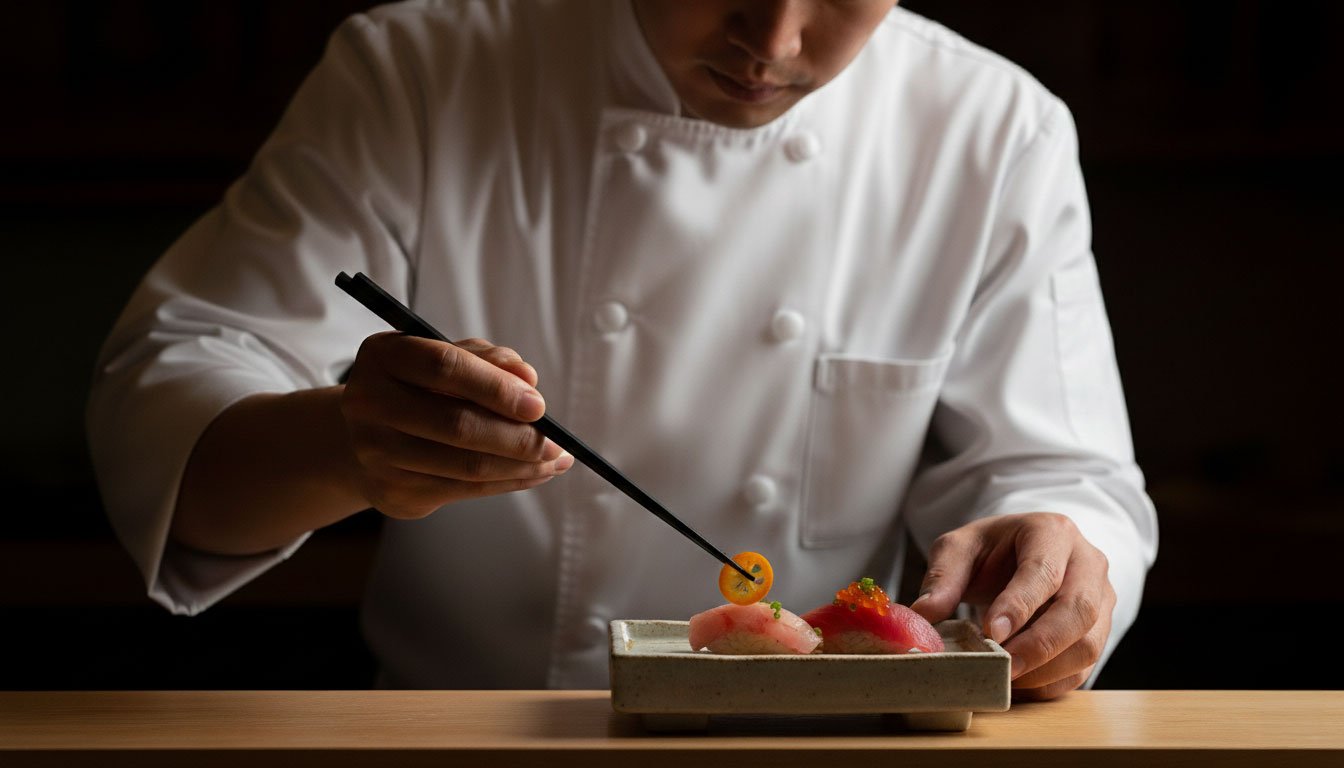
"This is one of the most dangerous assumptions in the restaurant industry, and it is especially serious for restaurants serving raw fish every service.
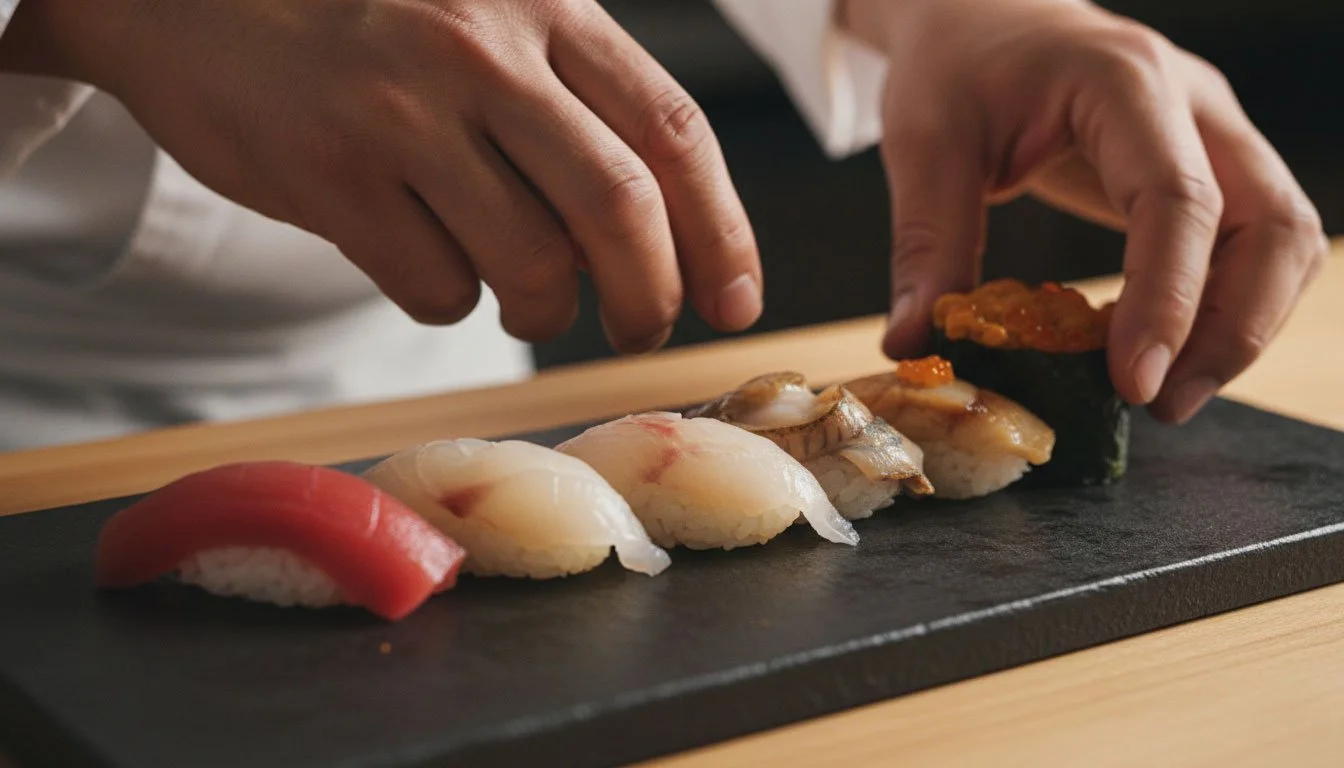
A standard general liability policy covers bodily injury and property damage to third parties. But many standard GL policies contain a products liability exclusion or apply sublimits to claims arising specifically from food and beverage products served by the business. When a customer falls ill after eating raw sashimi or oysters and files a claim against the restaurant, that claim may not fall cleanly under the standard GL policy depending on how the exclusions are written.
For a sushi and hibachi restaurant serving raw seafood on every table every night, this is not a theoretical exposure. It is a daily one. One serious foodborne illness claim can generate medical costs, lost wages, pain and suffering damages, and legal defense costs that a standard GL policy may not fully address.
Because we could not verify what Brian's previous policy actually covered due to missing documentation, we did not guess. We advised Brian to add specific products liability coverage addressing food and beverage claims rather than assuming the GL policy would respond.
When coverage is ambiguous, and the potential claim is this serious, assumption is not a strategy.
What to ask your agent: Does my general liability policy cover bodily injury claims arising specifically from food I serve, including raw seafood? Are there sublimits or exclusions that apply to products liability claims from my menu?"
Refrigeration and Power Outage Coverage
Extends equipment breakdown to specifically address power outage events causing refrigeration failure, in addition to mechanical breakdown. Covers both the equipment repair and the resulting inventory spoilage.
Gap 2: The Hibachi Underwriting Requirements Nobody Told Brian About
Brian Li:
"Cindy told me that underwriters need specific information about how a hibachi restaurant operates before they can properly cover it. I had never heard that before. My previous broker never asked me any of those questions."
Cindy Lee:
"Hibachi restaurants require a completely different underwriting conversation than standard dining establishments and most restaurant owners never have that conversation with their broker.
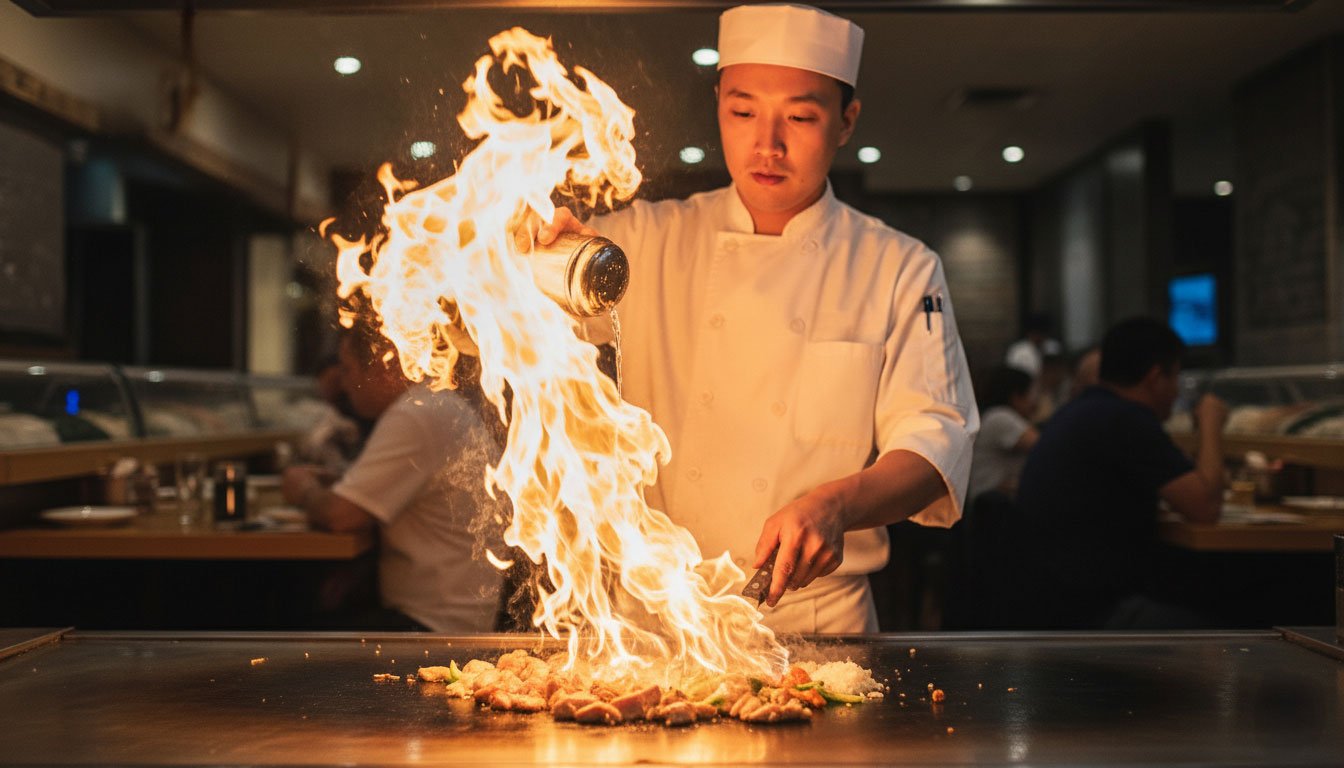
When I place coverage for a hibachi restaurant, the underwriter needs specific answers to specific questions before they can properly assess and price the risk. How many hibachi tables does the restaurant operate? How many seats surround each grill? What safety protocols are in place for the tableside fire performance? Are chefs trained and certified for hibachi performance? What is the distance between the grill surface and the nearest customer?
These are not administrative questions. They are the factors that determine whether the bodily injury coverage will actually respond at appropriate limits when a tableside fire incident generates a claim.
Brian's existing policy described Mizu as a full-service restaurant. It did not represent the hibachi fire performance element specifically. That means the carrier was not pricing for that exposure and the limits available might not be sufficient for a serious burn injury claim from a performance that goes wrong.
Under the New York Compensation Insurance Rating Board rules, full-service restaurant operations in New York use Class Code 9071, which is an all-inclusive classification covering all restaurant employees. That means Brian's hibachi chefs performing tableside fire shows carry the same workers compensation classification as his servers. While this simplifies payroll classification, it makes the accurate representation of the operation on the policy application even more important.
If Mizu adds live entertainment beyond the hibachi performance itself, that is an additional coverage requirement. Live entertainment coverage addresses bodily injury and property damage arising from entertainment activities and it is a separate consideration from the standard restaurant policy.
We worked with Brian to make sure the application and policy description accurately represented Mizu as a hibachi performance restaurant with specific safety protocols in place. That accurate representation is what ensures the coverage actually responds when a claim occurs.
What to ask your agent: Does my policy application accurately represent that my restaurant includes live fire hibachi performances? Have you disclosed the number of seats around each grill and the safety protocols in place? If my restaurant adds any form of live entertainment, does my policy require an additional coverage endorsement?"
Gap 3: The Backyard Hibachi Events That Had Zero Coverage
Brian Li:
"This one hit me the hardest. We started doing backyard hibachi parties and it became a real part of the business. Clients hire us to come to their home and we bring everything: the grill, the food, the chef. I thought my business insurance and my liability coverage traveled with us wherever we went.
When Cindy explained that my policy covered only the Staten Island restaurant location, I felt sick. Every one of those backyard events had been happening with no coverage at all. My employees were not covered working outside the restaurant. If something had gone wrong at a client's house, there would have been nothing."
Cindy Lee:
"This is the gap with the most serious potential consequences and it is the one that surprises restaurant owners most because the logic seems so straightforward. My business has insurance. My employees work for my business. Therefore my employees are covered when they work.
That is not how insurance works.
When Brian's team sets up a hibachi grill in a client's backyard, three things happen simultaneously that a standard restaurant policy was never designed to address.
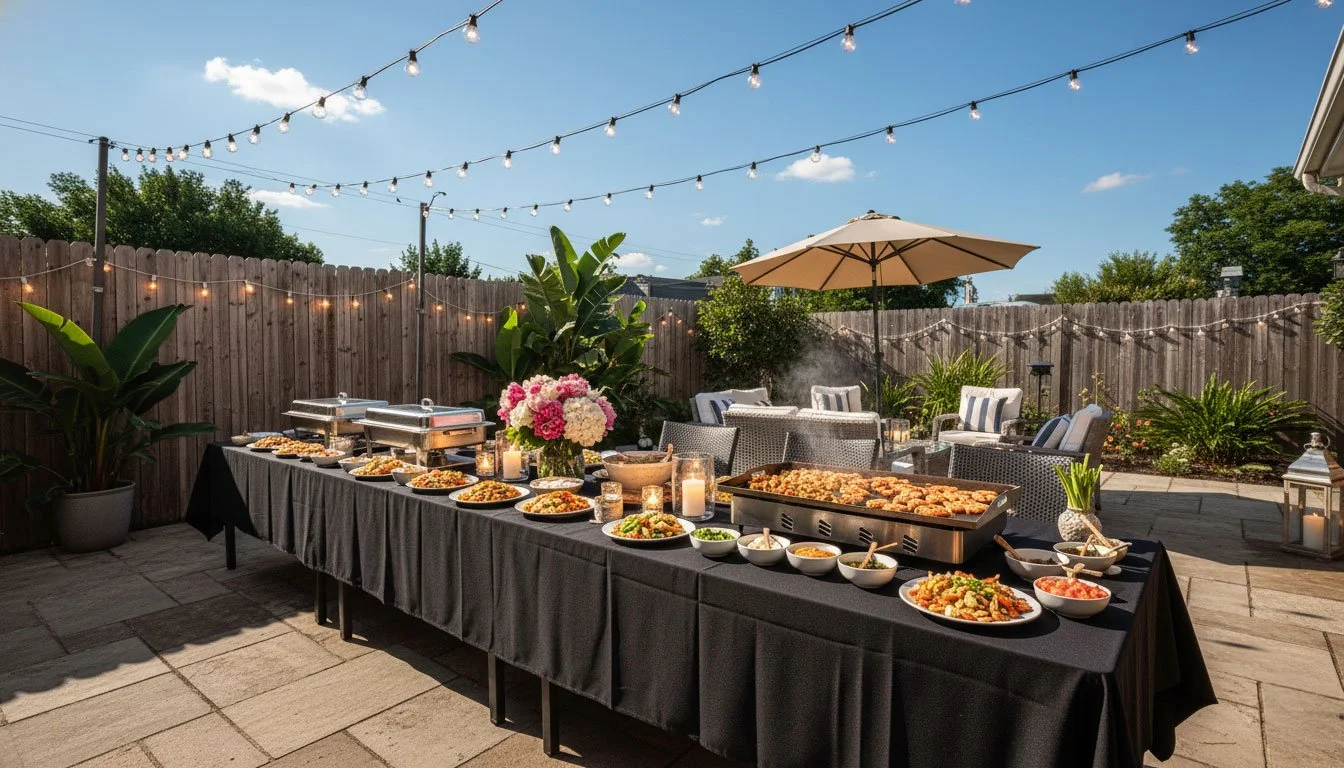
First, the operation leaves the insured premises. A standard commercial property and liability policy covers the named location on the policy declarations page. A private residence in another neighborhood is not that location. Bodily injury or property damage occurring there is not covered under the restaurant policy.
Second, Brian's employees are working in an environment they do not control. At the restaurant, Brian manages the space, the equipment, the safety procedures, and the layout. At a client's backyard, there may be children running near the grill, uneven ground, overhanging trees, or a wooden deck directly adjacent to where the hibachi is set up. None of those conditions are within Brian's control and all of them increase the likelihood of an incident.
Third, Brian had added this service without notifying his previous insurer. That omission does not just create a coverage gap. It creates a situation where the insurer could argue that the undisclosed operation affects the entire policy.
We addressed this gap in two layers.
The first layer is a catering and off-premises liability endorsement that extends Mizu's commercial liability coverage to backyard hibachi events and any other off-premises catering service. This addresses bodily injury to guests, property damage at the client's location, and liability arising from the food served at those events.
The second layer is a commercial umbrella policy extending above the primary commercial liability limits specifically to include off-premises catering operations. The umbrella provides additional limits above what the primary policy pays, which is especially important for an event where a fire incident at a client's private property could generate a claim involving both personal injury and property damage simultaneously.
On the workers compensation side, Brian's employees working at off-site events are covered under the New York workers compensation policy because it follows the employee regardless of where they are performing work for the employer. However, the disability component of New York workers compensation, which provides wage replacement for employees unable to work due to a work-related injury, is also in effect for off-site employees. Brian needed to understand that an employee injured at a backyard event has the same workers compensation and disability protections as one injured in the restaurant kitchen.
What to ask your agent: Does my policy cover my employees and my liability when I operate outside my restaurant location? Does my commercial umbrella extend to off-premises catering events? If I offer any service outside my named location, is that activity specifically endorsed on my policy?"
Gap 4: The Liquor Liability Coverage Brian Was Not Carrying
Brian Li:
"We serve sake, wine, and beer. It is part of the dining experience at Mizu. Cindy told me that my general liability policy had a specific exclusion for alcohol-related incidents. I did not know that was a separate category of risk with its own coverage requirement."
Cindy Lee:
"Liquor liability is a mandatory coverage for any restaurant serving alcohol in New York, and it is one of the most commonly missing policies I find when I review restaurant coverage.
A standard general liability policy contains a liquor liability exclusion, sometimes called the BYOB exclusion, that specifically removes coverage for bodily injury or property damage arising from the service of alcohol. For a restaurant that serves sake, wine, and beer as part of its regular dining service, this exclusion means that alcohol-related incidents are not covered under the GL policy at all.
New York's Dram Shop law, found under Alcoholic Beverage Control Law Section 11-101, allows injured third parties to sue the establishment that served the alcohol that contributed to the incident. If a Mizu guest is over-served and causes an accident leaving the restaurant, the injured party can bring a claim directly against Mizu under New York law. Without standalone liquor liability coverage, that claim has no policy to respond to it.
For Mizu's backyard catering events where alcohol is served, the liquor liability exposure extends off-premises as well. The umbrella coverage we placed above the primary limits also needs to coordinate with the liquor liability policy to make sure there are no gaps between the two.
We placed a standalone liquor liability policy for Mizu covering its restaurant operations and its off-premises catering events where alcohol is served.
What to ask your agent: Does my general liability policy contain a liquor liability exclusion? Do I have a standalone liquor liability policy covering both my restaurant and any off-premises events where alcohol is served? Do my umbrella limits coordinate correctly with my liquor liability policy?"
Gap 5: The Equipment Breakdown Claim Brian Never Filed
Brian Li:
"In 2025, one of our walk-in refrigerators broke down. We lost everything in that unit. Fresh fish, raw seafood- all of it had to be thrown out. Between the two walk-in units, we hold about eight to ten thousand dollars in raw seafood inventory at any given time.
I never filed a claim. I did not even think about it. I just absorbed the loss and moved on. When Cindy told me I had equipment breakdown coverage that would have covered exactly that situation, I could not believe it. I paid for something I never used because nobody told me it was there or what to do when I needed it."
Cindy Lee:
"Brian's situation with the refrigeration breakdown is one of the clearest examples of what happens when a broker sells a policy without explaining what is in it.
Equipment breakdown coverage addresses two distinct categories of loss for a restaurant like Mizu.
The first category is the physical equipment itself. Equipment breakdown coverage pays to repair or replace mechanical equipment that fails due to a covered breakdown event. This includes commercial refrigeration units, walk-in coolers, commercial stoves, dishwashers, and other non-movable equipment that is essential to daily operations. Importantly, when Brian's refrigeration unit broke down, the underwriter would need to see maintenance documentation for that unit as part of the claims process. Carriers require evidence that covered equipment has been regularly maintained. A refrigeration unit with no service records is a more difficult claim than one with documented quarterly maintenance.
The second category is the resulting inventory loss. When a walk-in refrigerator fails overnight at a sushi restaurant, the loss is not just the equipment repair cost. It is every piece of raw seafood inventory that was in that unit and cannot be served the following day. For Mizu, holding eight thousand to ten thousand dollars in raw seafood inventory across two large walk-in units, a single overnight failure represents a significant financial loss. The food spoilage and contamination coverage component of equipment breakdown addresses exactly this scenario.
Beyond refrigeration, equipment breakdown coverage for Mizu should address the commercial hibachi grills, the ventilation systems serving the hibachi section, and any other fixed commercial equipment essential to the restaurant's operations. Each piece of covered equipment should have maintenance documentation on file. Carriers will ask for those records when a claim is filed, and the absence of documentation can complicate or delay the claims process.
We reviewed Brian's equipment breakdown coverage, confirmed the limits were appropriate for the inventory value he holds and the equipment he operates, and made sure he understood exactly what documentation to maintain and what steps to take if a breakdown occurs again.
What to ask your agent: Does my policy include equipment breakdown coverage? Does it cover food spoilage and inventory loss resulting from a refrigeration failure or power outage? What maintenance documentation do I need to keep on file for my covered equipment? What is the exact process for filing a claim if my refrigeration goes down overnight?"
Food Contamination Liability
Covers liability claims and remediation costs arising from food contamination events beyond standard products liability coverage. Especially relevant for restaurants serving raw seafood daily.
Gap 6: The Certificate of Insurance Requirement Brian Did Not Know About
Brian Li:
"Cindy mentioned that if we ever do catering in a commercial office building or a venue, the building management company is going to ask us for a certificate of insurance before we can work there. I had not thought about that. We were focused on backyard events, but the business could go in other directions."
Cindy Lee:
"This is a gap that becomes relevant the moment a restaurant's catering operation moves beyond private residences into commercial spaces.
When Mizu performs a catering event in a commercial office building, a corporate venue, or any managed property, the building management company or property owner will almost always require a certificate of insurance before allowing the event to proceed. That certificate needs to name the building owner or management company as an additional insured and must carry the liability limits specified in the building's vendor requirements.
Those limits are frequently higher than a standard restaurant commercial liability policy carries by default. A commercial building management company may require two million dollars or more in general liability coverage per occurrence, plus additional umbrella limits above that. If Mizu's existing commercial liability policy carries limits below what the building requires, the catering event cannot proceed until the coverage is in place.
Brian has two options for addressing this requirement and the right choice depends on the frequency and nature of the commercial catering events.
The first option is to increase the commercial liability limits on Mizu's existing business policy to meet commercial venue requirements permanently. This makes sense if Mizu is pursuing commercial catering as a regular revenue stream. The premium increase for higher limits is often more cost-effective than purchasing separate coverage for each event and it provides consistent protection across all catering activities.
The second option is to purchase special event insurance separately for each commercial catering engagement. Special event insurance is a standalone policy covering a single event at a specific location for a specific date. It can be structured to meet the exact requirements of the building management company for that event and it does not affect the underlying restaurant policy. This option makes sense for occasional or one-off commercial catering engagements where a permanent limit increase is not warranted.
We walked Brian through both options and made sure he understood which situations call for which approach so that a last-minute certificate request from a venue does not become an obstacle to a catering booking.
What to ask your agent: If I cater at a commercial venue, can my existing policy issue a certificate of insurance that meets typical building management requirements? What liability limits does my current policy carry and how do they compare to common commercial venue requirements? Do I need to increase my permanent limits or purchase special event insurance for commercial catering engagements?"
Equipment Breakdown for Fixed Commercial Equipment
Covers non-movable equipment including commercial stoves, dishwashers, hibachi grills, and ventilation systems. Requires maintenance documentation on file for all covered equipment.
What Mizu Looks Like Now
Brian Li:
"I came to Blue Rock thinking I had insurance. What I actually had was a piece of paper that did not reflect my business at all. Six gaps. A completely uninsured backyard operation. An equipment breakdown claim I never filed because nobody told me I could. No liquor liability despite serving sake and beer every night. A hibachi operation that was never properly represented to the underwriter.
The thing that stays with me is that I was lucky. None of those backyard events went wrong. The refrigerator broke down, and I absorbed it, but I could absorb it. If a guest had been seriously burned at one of those parties, or if someone had gotten sick from the sashimi and sued us, or if we had been asked for a certificate at a commercial venue we wanted to cater, I would have been personally exposed for everything.
Blue Rock did not just sell me new policies. They sat down and understood what Mizu actually is. That had never happened before."
Cindy Lee:
"Mizu is a genuinely complex operation. A raw seafood program with daily food poisoning exposure. Live hibachi fire performances with specific underwriting requirements. Sake, wine, and beer service requiring standalone liquor liability. A growing off-premises catering business that was completely uninsured. Significant refrigerated inventory that was lost in 2025 under a coverage that was never explained to the owner. And a catering operation with potential commercial venue requirements that Brian had never considered.
Each one of those elements has its own insurance implications, and none of them were properly addressed in the policy Brian walked in with.
The most important thing I want restaurant owners in New York to take from Brian's story is this: having insurance and having the right insurance are two completely different things. A broker who sells you the cheapest available policy without asking about your menu, your entertainment, your alcohol service, your off-premises activities, or your equipment is not protecting your business. They are completing a transaction.
Brian deserved a real conversation about what his business actually does and what would happen if something went wrong. He deserved it years before he came to us. Every restaurant owner in New York deserves the same."
About the Expert
Cindy Lee is a Senior Insurance Specialist at Blue Rock Insurance Services. She has over 30 years of experience in the Property and Casualty insurance industry and has been consistently recognized as a top producer. She specializes in restaurant, food service, and small business commercial coverage across the NY metro area. Blue Rock is licensed in NY, NJ, CT, PA, and MA.
Is Your Restaurant Running Risks You Do Not Know About?
If your restaurant serves raw seafood, runs live entertainment, sells alcohol, offers catering or private events, or has added any new service since your last policy renewal, a coverage review is where to start.
Not a quote. A review.
Blue Rock Insurance Services is an independent agency based in Flushing, NY, serving restaurants and food service businesses across New York, New Jersey, Connecticut, Pennsylvania, and Massachusetts.
Contact Blue Rock at hibluerock.com or call 718-886-6601. Bring your current policy if you have it. We will tell you exactly what it covers, what it does not, and what needs to change before something goes wrong.