
How Post Heritage Found 4 Insurance Gaps in a Brooklyn Flood Zone Print Shop

Key Takeaways
A standard Business Owners Policy explicitly excludes flood damage. Businesses in NYC flood zones require a separate flood insurance policy for contents and physical space.
Leased equipment carries contractual insurance requirements. If your coverage does not match your lease agreement, you are personally liable for the gap at the time of loss.
Finished client orders held in your shop are your legal responsibility until pickup. General liability and a commercial umbrella address this exposure directly.
Business income coverage inside a BOP only triggers on covered perils. A flood-caused shutdown requires a separately structured cash flow protection policy.
Risk reduction steps, including sewer backup stoppers, fire extinguisher placement, and evacuation procedures affect your risk profile and renewal premiums.
Ken Hew has run Post Heritage, a professional print shop in Park Slope South, Brooklyn, since 2017. When a friend referred him to Blue Rock Insurance Services that year, he came in with one straightforward request: get me a standard policy, keep me compliant with my lease, and let me get back to running my business.
Constance Sung, founder and principal of Blue Rock Insurance Services, had a different response. Before recommending any policy, she reviewed the business from the ground up: the address, the lease agreements, the equipment arrangements, the nature of the work, and the neighbors.
What she found were four gaps that a standard policy would have left completely exposed. This is the story, in their words.
Gap 1: The Flood Zone Ken Did Not Know He Was In
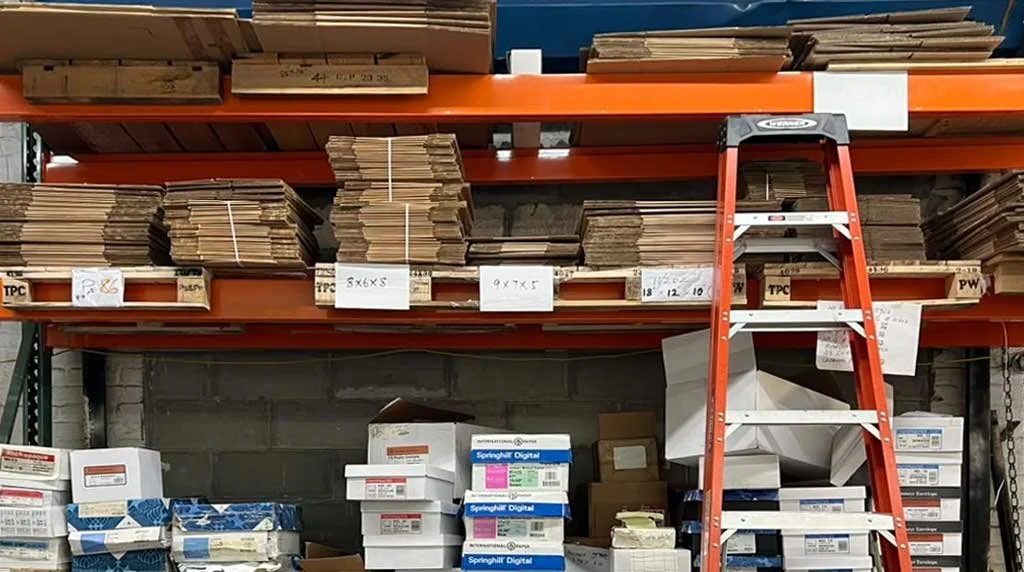
Ken Hew: I knew the neighborhood. I knew Park Slope. Flood risk was not something I was thinking about at all. When Constance showed me the flood zone designation for my address, that stopped me. I had paper inventory, finished client orders, computer stations, and raw stock throughout the shop. I had no idea any of that was sitting in a flood zone.
Constance Sung: The first thing I do with any commercial client is verify the physical risk profile of their location. For Post Heritage, the FEMA flood zone designation was immediate. That changes everything about how you structure the coverage.
A standard Business Owners Policy explicitly excludes flood damage. That is not fine print. It is a defined exclusion that covers surface water, storm surge, and sewer backup caused by flooding. A business in a designated flood zone with only a BOP has zero flood coverage. Zero.
For a print shop, the exposure is compounded. Paper inventory, finished client orders, raw stock, and computer workstations. Water destroys all of it. We advised Ken to purchase a separate flood insurance policy covering the physical space and all contents. That policy sits outside the BOP entirely and triggers independently when flood is the cause of loss.
What to ask your agent: Is my business address in a FEMA-designated flood zone? If yes, does my current coverage include a standalone flood policy, or am I relying on a BOP that excludes flood entirely?
Gap 2: The Leased Equipment Compliance Trap
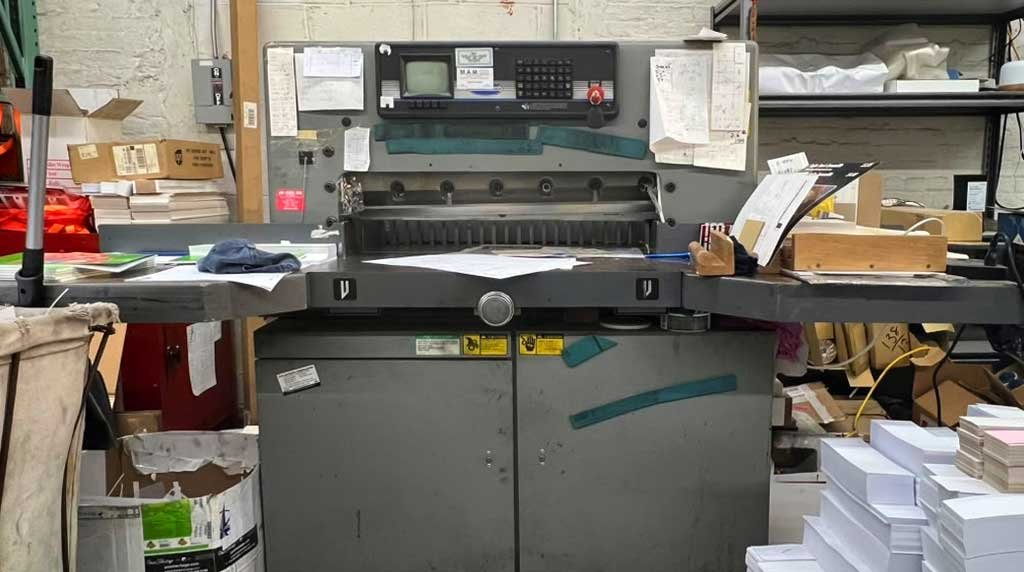
Ken Hew: Some of my printing machines are leased from equipment providers. I had signed those agreements and moved on. It never occurred to me that the lease had specific insurance requirements I was supposed to be meeting. Nobody had ever asked to see my lease agreements before. Constance did.
Constance Sung: Equipment lease agreements for commercial machinery almost always contain specific insurance requirements written into the contract. The lessee is legally obligated to meet those requirements. Most business owners sign the lease, buy a general policy, and assume they are compliant. They are frequently not.
When I reviewed Ken's lease agreements, I found that his planned coverage would have valued the leased machines at actual cash value, meaning the depreciated market value at the time of a loss. The lease required replacement cost coverage, meaning what it actually costs to replace the machine with a comparable unit.
The gap between those two numbers, the depreciated value versus the replacement cost, is the business owner's personal financial liability under the lease contract. We increased the coverage to replacement cost on all leased equipment and brought Post Heritage into full contractual compliance before any claim ever occurred.
This gap appears in almost every business that leases specialized equipment. Printers, restaurants with leased kitchen equipment, medical offices, and contractors. The lease requirement and the policy language are rarely compared side by side unless someone makes a point of doing it."
What to ask your agent: Have you reviewed my equipment lease agreements? Does my current policy meet the insurance requirements written into each lease, and am I covered at replacement cost or actual cash value?
Gap 3: Finished Goods Sitting in the Shop Are Your Responsibility
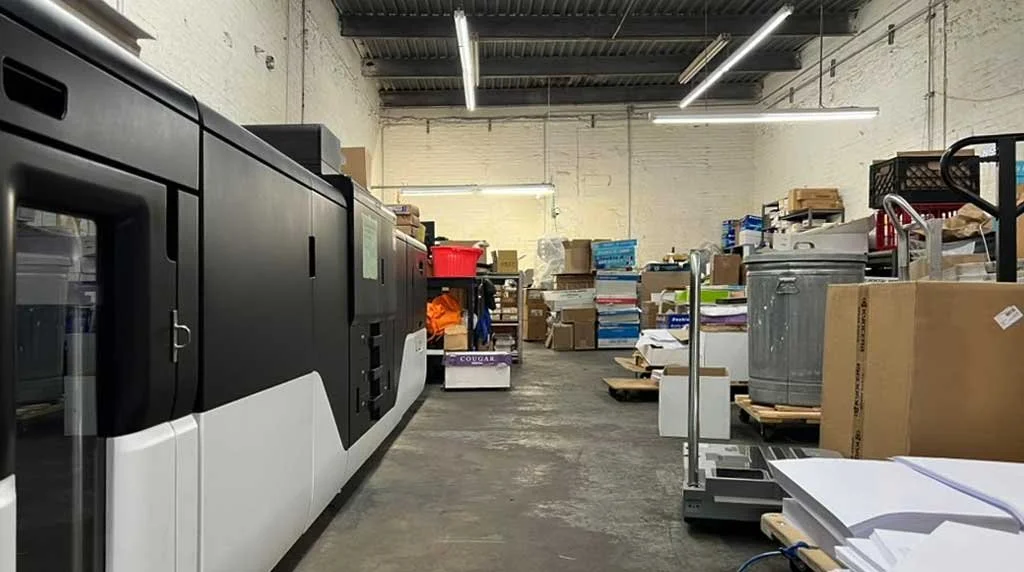
Ken Hew: I complete a job, and it sits in my shop waiting for the client to pick it up. I never thought about what happens if something destroys those orders before pickup. The client paid for that work. They are not going to absorb the loss because something happened in my shop.
Constance Sung: This is one of the most commonly overlooked exposures in retail and production businesses. Finished client property held on your premises for pickup is legally in your care, custody, and control. If it is damaged or destroyed before the client collects it, the liability sits with the business owner.
For a print shop like Post Heritage, the exposure is significant at any given time. Multiple completed orders, large-format runs, packaged materials ready for delivery. One fire or flood event could destroy work across dozens of clients simultaneously.
We addressed this in two layers. General liability coverage specifically structured to include third-party property in Ken's care and custody, and a commercial umbrella policy providing additional limits above the primary general liability. The umbrella matters here because a single loss event can generate multiple simultaneous client claims. The primary policy limits can be consumed quickly. The umbrella is what protects the business owner's personal assets when the primary limits are not enough."
What to ask your agent: Does my general liability policy specifically cover finished client goods held on my premises? What are my current limits, and do I have a commercial umbrella above them?
Gap 4: The Business Interruption Blind Spot
Ken Hew: I assumed that having business income coverage in my BOP meant I was covered if I had to close. Constance explained that it only pays if the reason you closed is something the policy covers. Flood is not one of those things. I could have been forced to close for two weeks due to a flood and received nothing from my business income coverage.
Constance Sung: This is the gap that surprises business owners the most because it requires understanding not just what a policy covers, but what triggers it.
Business income coverage inside a standard BOP will pay for lost revenue during a forced closure. But only when that closure is caused by a covered peril. Fire, windstorm, and theft are covered perils under a standard commercial property form. Flood is not. It is explicitly excluded.
A business in a flood zone that relies on a standard BOP for business interruption protection has no income coverage for the scenario most likely to force it to close.
I structured Post Heritage's coverage in two separate layers. Physical asset protection tied to the flood insurance policy, which addresses the actual property damage from a flood event. And a separately purchased cash flow protection policy that triggers specifically on flood-related shutdowns, covering lost business income during the closure period. These are two different products from two different policy forms. They cannot be combined into one, and they do not replace each other.
After thirty years of underwriting for national carriers, this is one of the most consistent gaps I see in commercial policies across New York. The BOP business income coverage gives owners a false sense of security unless someone specifically walks through which perils actually trigger it.
What to ask your agent: Which specific perils trigger my business income coverage? If a flood forces me to close, will my current policy pay for lost income during that closure? If not, what separate policy fills that gap?
Beyond the Policies: What Post Heritage Did to Reduce Risk
Ken Hew: Constance pointed out things about my location that I had never connected to my insurance situation. Being next to ironwork and mechanics matters for fire risk. Having paper everywhere matters. Having clear exits matters for workers’ comp. It all connects in ways I had not thought about.
Constance Sung: Insurance addresses what happens after a loss. Risk reduction addresses whether the loss happens in the first place, and it directly affects how carriers view your business at renewal.
Post Heritage sits adjacent to ironwork and mechanics operations. High-heat, high-spark neighbors represent a real fire exposure for a paper-intensive business. We advised placing fire extinguishers at multiple accessible points throughout the shop and establishing documented evacuation pathways and fire drill procedures for staff.
We also advised installing sewer backup stoppers on the drainage pipes. Sewer backup is one of the most frequent and most underinsured water damage events in urban commercial spaces in New York. A stopper costs almost nothing. The water damage it prevents can be tens of thousands of dollars.
Press machine operators and staff handling heavy materials face genuine bodily injury risk every day. Documented safety procedures and clear pathways reduce workers’ compensation exposure over time and signal to carriers that the business is actively managed, not just passively insured.
Nine Years Later
Ken Hew: Have someone actually look at what you have. Not just sell you a policy. Look at the lease agreements. Look at the flood zone map. Look at who your neighbors are. Look at what you hold in the shop for clients. I needed one standard policy. It turned out I needed four different things working together. The standard policy would have left me exposed in ways I would not have discovered until something went wrong. By then, it is too late.
Constance Sung: The four gaps we found at Post Heritage were not the result of negligence or a bad prior agent. They were the result of a standard policy being applied to a business with a specific location, specific equipment obligations, specific client property exposure, and a specific neighbor profile that a standard policy was never designed to address.
This is what a coverage audit is for. Not to sell more policies. To map the actual exposure of a real business in a real location and build coverage that matches what is actually at risk.
Post Heritage has been a Blue Rock client since 2017. The relationship started with one conversation about what a standard policy does not cover. That conversation is available to any business owner who wants to have it.
Schedule Your Coverage Audit
Blue Rock Insurance Services is an independent insurance agency based in Flushing, NY, serving businesses and families in New York, New Jersey, Connecticut, Pennsylvania, and Massachusetts.
If your business leases its space, operates specialized or leased equipment, holds client property on-site, or is located in a flood zone, a coverage audit is the right starting point. Not a quote. An audit.