
What Your General Liability Insurance Is Not Covering in New York

Key Takeaways
A standard general liability policy excludes professional service injuries. If your business involves physical contact with clients or applies products to their bodies, your GL policy may not cover resulting injury claims without a professional liability endorsement.
Property damage sublimits inside a GL policy are often set too low for the actual scale of work a business performs on client property. A sublimit caps the payout on a specific claim type regardless of your overall policy limit.
Finished client goods held on your premises are your legal responsibility until pickup. Standard GL coverage addresses this but often at limits insufficient for businesses holding multiple client orders simultaneously.
Tools and equipment brought to job sites are typically excluded from standard GL coverage. A separate inland marine or tools and equipment endorsement is required.
A coverage audit is not the same as a quote. A quote tells you what a policy costs. An audit tells you what your existing policy does not cover.
Most New York business owners carry general liability insurance. The certificate is on file. The premium gets paid. The policy renews every year without anyone looking closely at what it actually covers.
That is the problem.
A standard general liability policy contains exclusions, sublimits, and gaps that only become visible when a claim occurs. By then, it is too late to fix them. The three situations below are real gaps Blue Rock identified for real clients operating in Brooklyn and New York. In each case, the business had an active general liability policy. In each case, the policy left them exposed in ways they did not know about until we reviewed their coverage.
Gap 1: Chemical Injury Claims and Customer Disputes at a Personal Care Business
Client: New Top Way Nail Spa, Brooklyn
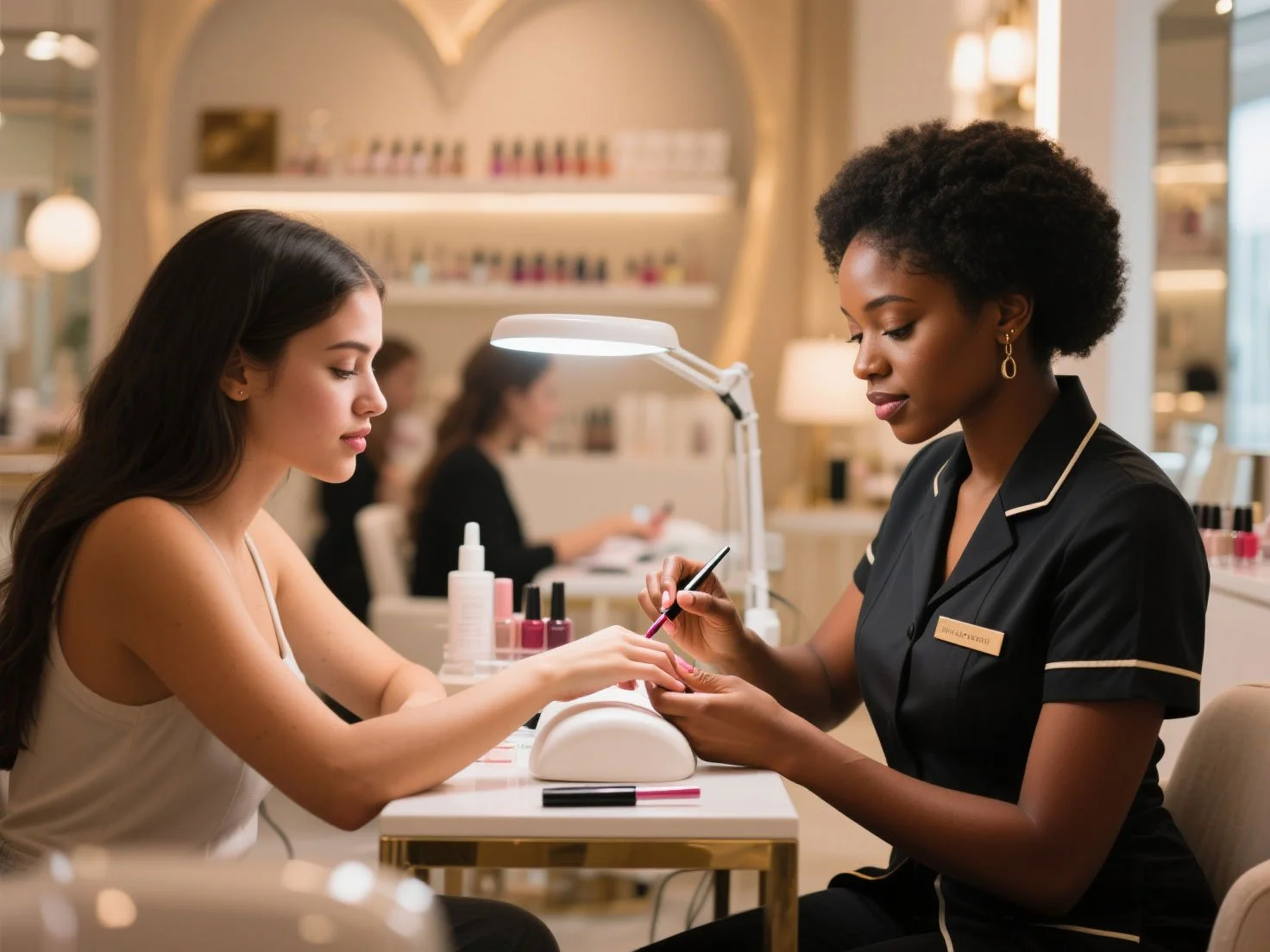
A nail spa operates in direct physical contact with clients every single day. Chemical products are applied to skin and nails. Equipment makes contact with customers. And like any customer-facing business in New York, disputes arise, sometimes with customers who escalate minor disagreements into formal claims.
When Blue Rock reviewed New Top Way Nail Spa's coverage, two specific gaps emerged.
First, chemical burn injuries from products applied during a service were not fully covered under the standard GL policy. A standard general liability form contains a professional liability exclusion that removes coverage for injuries arising from professional services. For a nail spa, this exclusion is significant. If a client claims a chemical product caused a skin reaction or injury during a service, that claim can fall directly into the professional liability exclusion gap rather than being paid under the GL policy. Resolving this requires either a professional liability endorsement added to the GL policy or a separate professional liability policy covering personal care services.
Second, the policy did not adequately cover disputes and damages brought by difficult customers. When a client escalates a service dispute into a formal claim for damages, including claims of emotional distress or personal injury related to the interaction, a standard GL policy may not cover the full cost of defending against and settling that claim. Personal and advertising injury coverage within a GL policy addresses some of this, but the limits and scope of what qualifies vary significantly between carriers and policy forms.
What Blue Rock did: added a professional liability endorsement to cover injury claims arising from nail services and chemical product applications, and reviewed the personal and advertising injury coverage terms to ensure customer-dispute scenarios were properly addressed within the policy structure.
What to ask your agent: Does my general liability policy contain a professional liability exclusion? If a client claims injury from a service I performed, which part of my policy responds to that claim and what are the limits?

Gap 2: Tools, Equipment, and Low Property Damage Sublimits on a Job Site
Client: AC & Appliances Center, HVAC Sales and Installation, New York
AC & Appliances Center sends technicians into customer homes and commercial spaces every day to install HVAC equipment. That work involves tools, heavy machinery, and direct contact with a customer's existing property: walls, floors, ductwork, electrical systems, and personal belongings in the work area.
When Blue Rock reviewed their coverage, two gaps appeared immediately.
First, their general liability policy did not cover tools and equipment brought to job sites. If a technician's tools were stolen from a customer's property or damaged during a job, the GL policy excluded it. Tools and equipment in transit or at a job site require a separate inland marine or tools and equipment endorsement that standard GL policies do not include by default.
Second, the property damage sublimit inside their GL policy was set too low for the scale of jobs AC & Appliances was actually performing. A sublimit is a maximum payout for a specific category of claim within a larger policy. If a technician accidentally damages a customer's flooring, cabinetry, or HVAC system during installation, the claim pays up to the sublimit only, not the full policy limit. For a business performing large residential and commercial HVAC installations, a low property damage sublimit creates a personal liability gap on every job.
What Blue Rock did: added a tools and equipment endorsement covering job site equipment in transit and on location, and increased the property damage sublimit to match the actual scale of AC & Appliances' installation work.
What to ask your agent: Does my GL policy cover tools and equipment at job sites? What is my property damage sublimit specifically, and does it match the value of work my team performs inside customer properties?

Gap 3: Finished Client Goods Held on Your Premises
Client: Ken Hew, Founder, Post Heritage, Park Slope South, Brooklyn
Post Heritage produces professional print work for clients across New York. Completed orders sit in the shop waiting for client pickup, sometimes for several days at a time. Those packages represent work that has been invoiced, produced, and in many cases already paid for.
When Blue Rock reviewed Post Heritage's coverage, one gap stood out immediately. If a fire, flood, or other event destroyed completed client orders before pickup, the standard GL policy would not cover the full value of those finished goods at the limits Ken carried. Property belonging to others held in your care, custody, and control sits in a specific and often underfunded category inside a standard general liability form.
For a print shop holding multiple large-format client orders at any given time, a single loss event can generate simultaneous claims from multiple clients. Primary GL limits can be exhausted quickly when claims stack against the same policy.
What Blue Rock did: structured GL coverage specifically addressing third-party property in Post Heritage's care and custody, and added a commercial umbrella policy above the primary limits to handle scenarios where multiple client claims arise from a single event.
What to ask your agent: Does my GL policy specifically cover finished client property held on my premises? What are my per-occurrence limits, and do I have umbrella coverage above them?
The Difference Between a Quote and an Audit
Every insurance agent can give you a quote. A quote tells you what a policy costs. It does not tell you what your existing policy leaves uncovered.
The three gaps above were found during coverage audits Blue Rock conducted for real clients in Brooklyn and New York. In each case, the business had an active policy. In each case, the policy had a gap the owner did not know existed.
Constance Sung, Founder and Principal of Blue Rock Insurance Services, has spent over 30 years as a Property and Casualty underwriter with national carriers. That background means Blue Rock reviews coverage the way an underwriter does: looking at what the policy excludes, not just what it includes.
If your business operates in a customer-facing environment, employs people who work on client property, or holds third-party property on your premises, the audit is where to start.
-
General liability insurance protects businesses from third-party claims. These claims can be due to bodily injury, property damage, or personal injury.
-
It safeguards against unforeseen expenses that could cripple a business. Without it, businesses may face substantial legal and financial risks.
-
Several factors influence the cost. These include business size, industry, location, and claims history.
-
Some insurers offer flexible payment plans. These plans allow businesses to secure coverage without a significant initial payment.

Schedule Your Coverage Audit
Blue Rock Insurance Services is an independent insurance agency based in Flushing, NY, serving businesses and families across New York, New Jersey, Connecticut, Pennsylvania, and Massachusetts.
We do not represent any single carrier. We work for you.